

How to Showcase Bioinformatics Projects to Land Remote Jobs Globally (2026 Guide)

Transform your bioinformatics work into a compelling portfolio that attracts international opportunities
Introduction
In the competitive landscape of global bioinformatics, having strong technical skills isn't enough. You could have analyzed thousands of genomic sequences, built sophisticated machine learning models, or developed innovative computational pipelines - but if you can't showcase these achievements effectively, opportunities will pass you by. The difference between talented bioinformaticians who land remote positions at top international companies and those who struggle isn't always skill level; it's presentation.
Remote bioinformatics positions offer unprecedented advantages: work from anywhere, access to cutting-edge global projects, competitive international salaries, and collaboration with world-class researchers. Yet most candidates fail to position their work in ways that resonate with global employers. They bury their best projects in academic jargon, neglect to document methodologies clearly, or fail to demonstrate real-world impact.
This comprehensive guide shows you exactly how to represent your bioinformatics projects to attract global remote opportunities. Whether you're a PhD candidate building your research portfolio, a recent graduate seeking your first position, or an experienced professional pivoting to remote work, you'll learn proven strategies for showcasing your computational biology expertise in ways that make international employers take notice. From structuring your GitHub repositories and building compelling project portfolios to crafting case studies and optimizing your online presence, we'll cover everything you need to stand out in the global bioinformatics marketplace.
Why Project Presentation Matters in Global Bioinformatics
The bioinformatics job market has fundamentally shifted over the past five years. Remote work, normalized during the pandemic, has created a truly global talent marketplace where a researcher in India can work for a Swiss pharmaceutical company, a developer in Brazil can contribute to an American genomics startup, and a bioinformatician in Nigeria can collaborate with European research institutions - all without relocating. This globalization creates enormous opportunities but also intensifies competition.
When you're competing against candidates from dozens of countries, your technical skills become table stakes rather than differentiators. Everyone applying for senior bioinformatics positions knows Python and R. Most candidates have experience with NGS data analysis and statistical modeling. What separates candidates who receive interview requests from those whose applications disappear into databases is how effectively they communicate their capabilities through project presentation.
International employers reviewing hundreds of applications don't have time to decipher poorly documented code or interpret vague project descriptions. They need to understand quickly: What biological problem did you solve? What computational approaches did you use? What were the outcomes? How does your work demonstrate skills relevant to their needs? A clear, professional project presentation answers these questions immediately, moving you from the "maybe" pile to the "interview" pile.
Consider this reality: a well-presented bioinformatics project demonstrating moderate technical complexity often attracts more opportunities than a sophisticated analysis buried in academic obscurity. Employers aren't just hiring your technical skills—they're hiring your ability to communicate complex work clearly, document methodologies reproducibly, and demonstrate impact tangibly. These are precisely the skills that effective project presentation showcases.
Step 1: Structure Your Bioinformatics Portfolio Foundation
What Should Your Portfolio Include?
Your bioinformatics portfolio is your professional showcase - a curated collection of your best work designed to demonstrate capabilities relevant to your target opportunities. Unlike an academic CV that lists everything you've ever done, your portfolio strategically highlights 4-7 projects that tell a coherent story about your expertise, problem-solving approach, and the value you can deliver to employers.
Start by selecting projects that demonstrate diversity in both biological domains and computational techniques. Include at least one genomics analysis project (variant calling, RNA-seq, or genome assembly), one data visualization or dashboard project showing you can communicate findings effectively, one pipeline or tool development project demonstrating software engineering skills, and one machine learning or statistical modeling project if applicable. This range proves you're not a one-trick specialist but a versatile bioinformatician capable of adapting to different challenges.
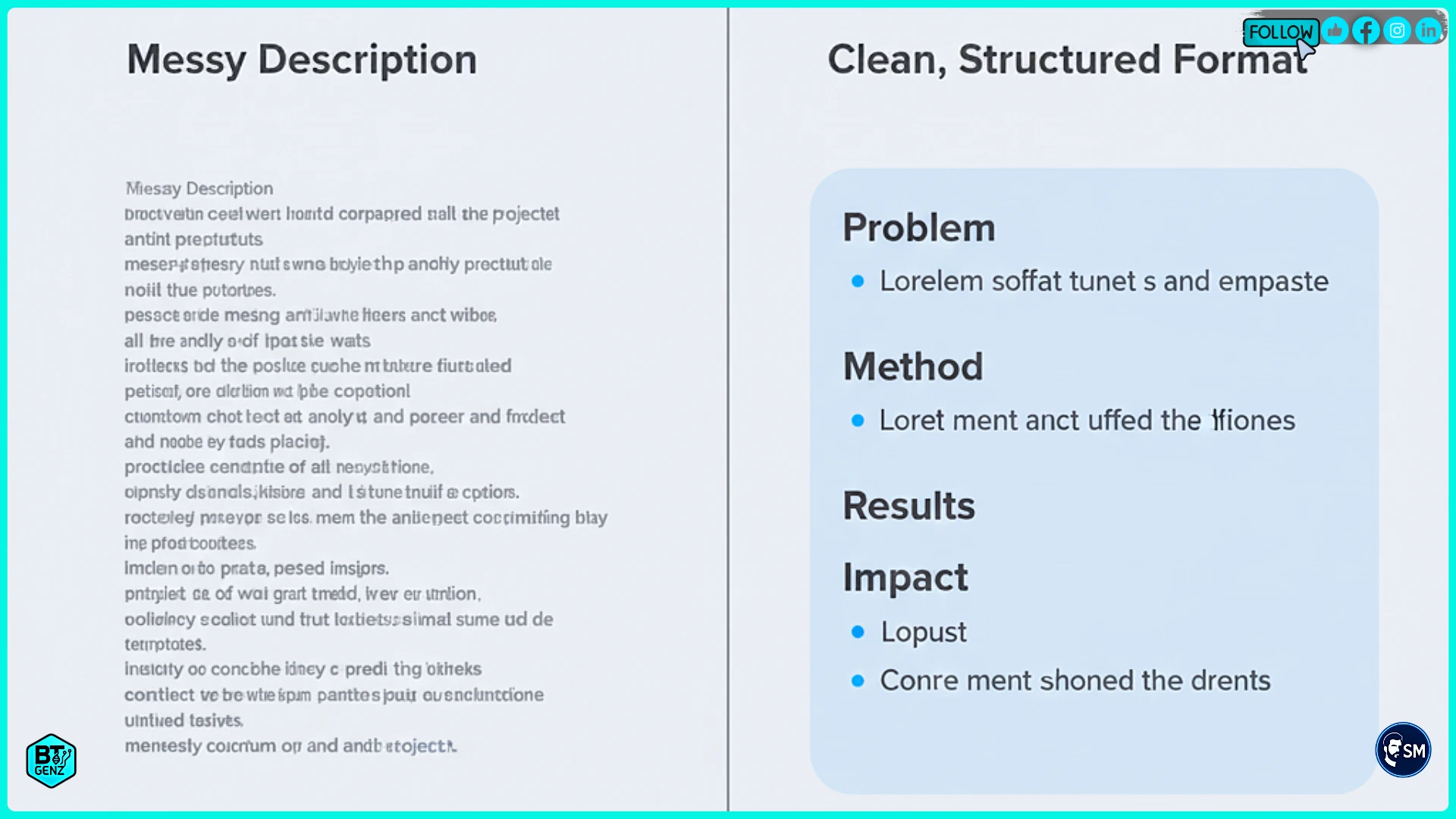
Each project in your portfolio should include five essential components. First, a clear problem statement explaining the biological question or computational challenge you addressed. Second, your methodological approach detailing the tools, algorithms, and techniques you employed. Third, results and outcomes showing what you discovered or built, ideally with visualizations. Fourth, the practical impact or significance of explaining why this work matters. Fifth, technical documentation including code repositories, data sources, and reproducibility information.
Quality vastly outweighs quantity in portfolio development. Three exceptionally well-documented projects demonstrating clear thinking and professional presentation will attract more opportunities than ten mediocre projects with minimal explanation. Invest time making each project shine rather than rushing to add more items. If you're just starting and lack extensive project history, that's fine - begin with 2-3 strong projects and expand over time as you complete additional work.
Choosing the Right Platform for Your Portfolio
Multiple platforms can host your bioinformatics portfolio, each with distinct advantages. GitHub Pages offers free hosting, seamless integration with your code repositories, and technical credibility within the developer community. Personal websites built with platforms like WordPress, Wix, or custom HTML provide maximum design flexibility and professional polish. LinkedIn serves as a professional network where recruiters actively search for candidates. Academic portfolio sites like ResearchGate or Google Scholar work well if you're targeting research positions specifically.
For most bioinformaticians seeking global remote opportunities, the optimal strategy combines GitHub for technical work with a dedicated portfolio website for professional presentation. Your GitHub showcases the depth of your technical capabilities through code repositories, while your portfolio website presents that work in an accessible, visually appealing format that non-technical stakeholders can appreciate. This dual approach serves both technical reviewers who want to examine your code and hiring managers who need to understand your impact without diving into implementation details.
When building your portfolio website, prioritize clarity and speed over elaborate design. Use a clean, professional template that loads quickly and displays well on mobile devices. Include a strong homepage summarizing who you are, what you do, and what makes you valuable in 2-3 sentences. Create a dedicated projects page where each project has its own detailed case study. Add an about page providing your background, skills, and career interests. Include a contact page or prominent email address, making it easy for opportunities to reach you. Remember - the goal is showcasing your work, not demonstrating web design prowess.
Step 2: Optimize Your GitHub for Global Visibility
Why GitHub Matters for Bioinformatics Careers
GitHub has become the universal portfolio for computational professionals, including bioinformaticians. When employers evaluate candidates for remote positions, checking GitHub profiles is standard practice - often before even reading resumes. Your GitHub account demonstrates not just what you say you can do, but what you've actually done. It shows your coding style, documentation habits, collaboration approach, and consistency of contribution. A well-maintained GitHub profile can generate inbound opportunities without you actively applying.
Yet most bioinformatics professionals treat GitHub as merely a backup system for their code rather than a professional showcase. They create repositories with cryptic names, skip README files entirely, upload uncommented scripts, and abandon projects publicly when they move on to new work. This approach wastes GitHub's potential as a career accelerator. With strategic effort invested in proper repository structure and documentation, your GitHub profile becomes a powerful magnet for global opportunities.
Creating Professional Bioinformatics Repositories
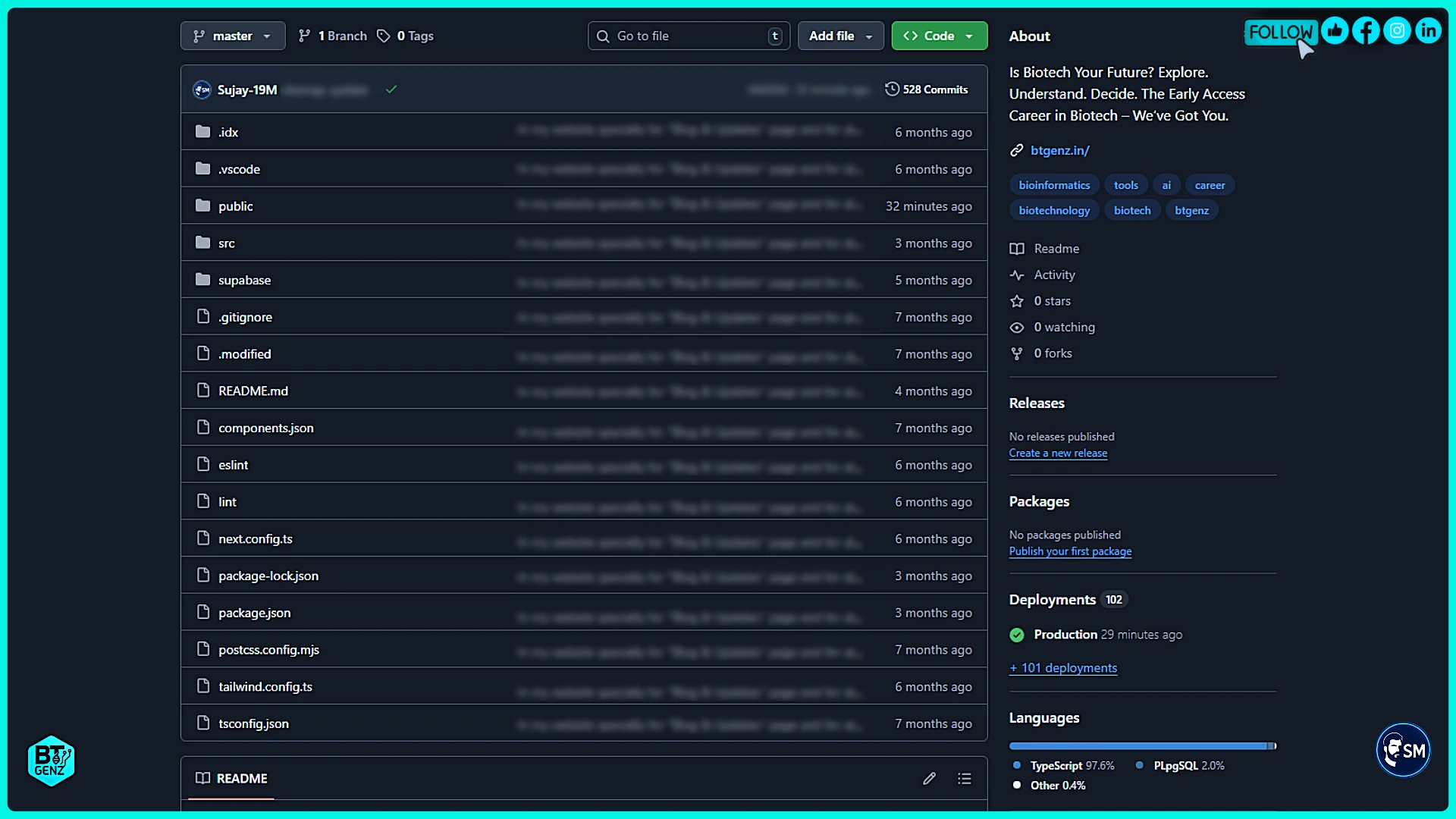
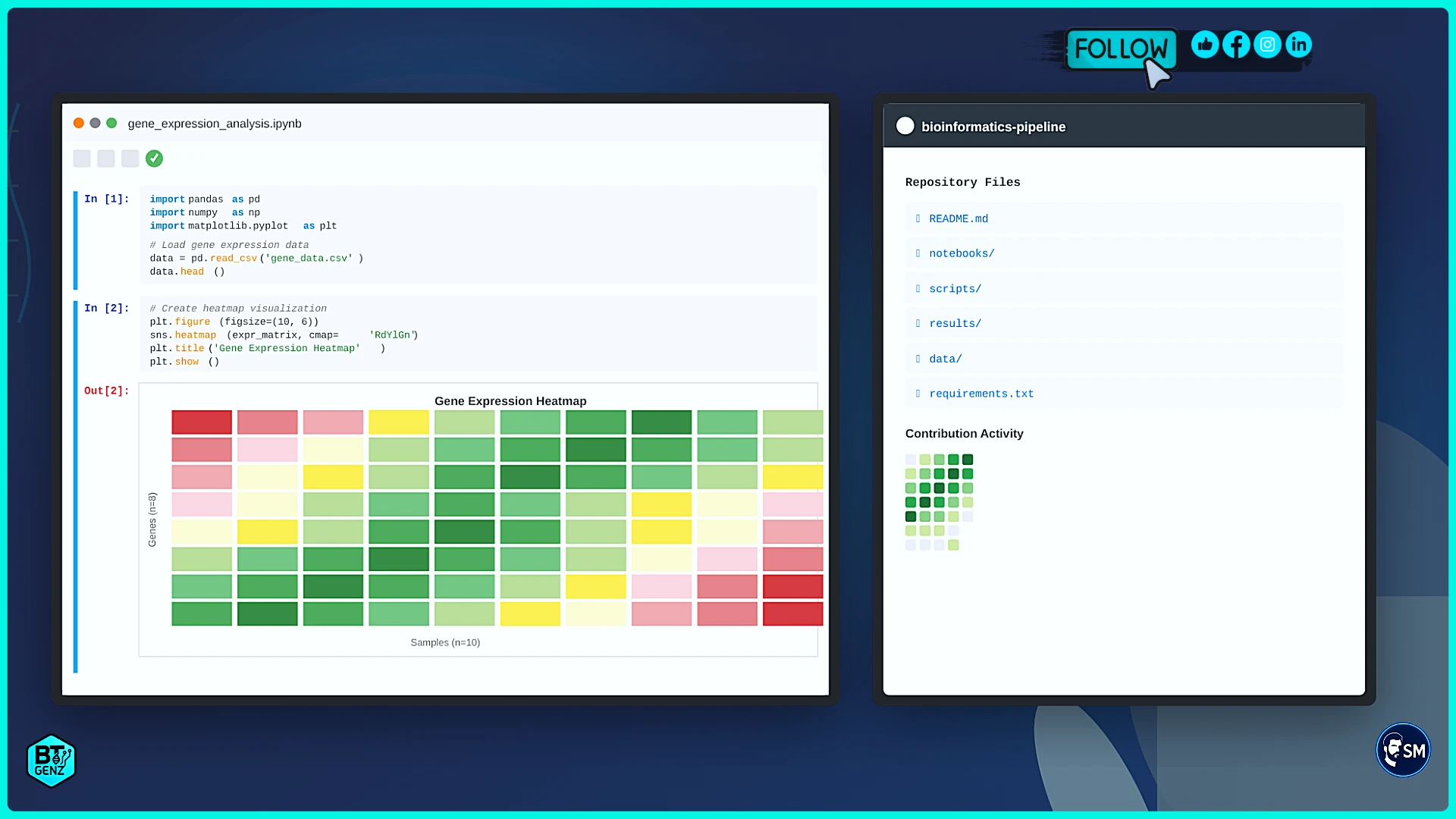
Every repository in your GitHub profile should follow professional standards, even if you're the only one who'll ever use the code. Start with a clear, descriptive repository name that immediately conveys the project's purpose: "RNA-seq-differential-expression-pipeline" is infinitely better than "project_final_v3". Write a comprehensive README file that serves as your repository's front door - this is often the only file recruiters will read, so make it count.
Your README should follow a standard structure that answers key questions efficiently. Begin with a one-paragraph project summary explaining what problem you're solving and what your code does. Add an installation section detailing dependencies, environment setup, and how to get the code running. Include a usage section with clear examples showing how to execute your scripts or pipeline. Provide a methodology section explaining your computational approach and biological rationale. Add a results section highlighting key findings or capabilities, ideally with visualization examples. Include a requirements or dependencies section listing all packages, tools, and versions needed. End with a license statement and acknowledgments if you built on others' work.
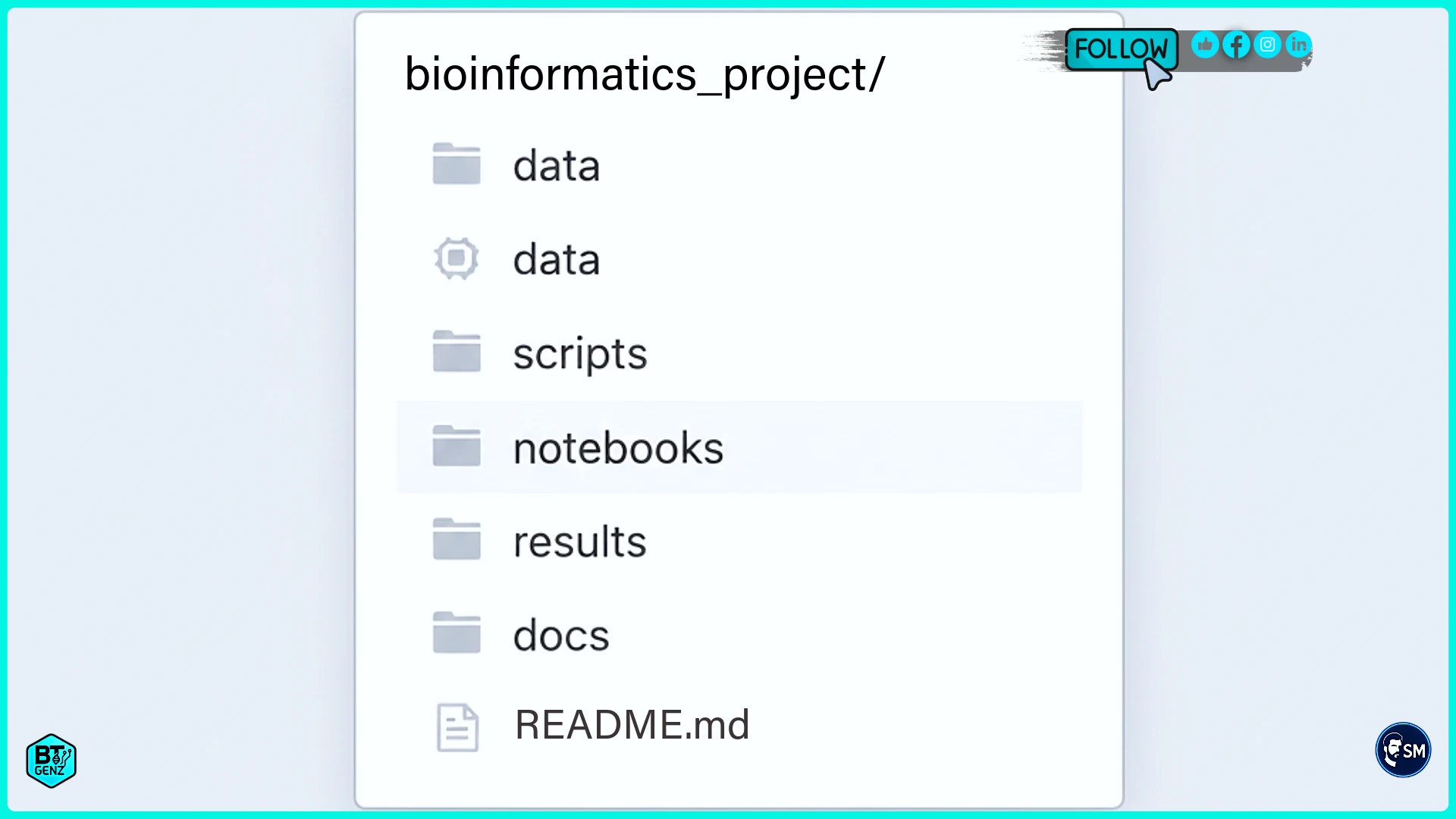
Code organization matters tremendously for professional impression. Structure repositories with clear directory hierarchies: separate folders for raw scripts, processed data, results, figures, and documentation. Use consistent, meaningful file names that explain content without needing to open files. Comment your code generously - assume readers don't have the context you had when writing. Include a requirements.txt or environment.yml file enabling others to recreate your computational environment exactly. Add example data or links to public datasets enabling reproducibility without requiring access to proprietary information.
Showcasing Your Best Work Through Pinned Repositories
GitHub allows you to pin up to six repositories to the top of your profile page. This feature is criminally underutilized by bioinformatics professionals. Your pinned repositories are prime real estate - they're the first projects anyone visiting your profile will see, making them your best opportunity for strong first impressions. Choose these six projects strategically to demonstrate breadth and depth.
Pin repositories that showcase different facets of your expertise rather than six similar projects. Include your most sophisticated analytical pipeline, your best data visualization work, any tools or packages you've developed, your strongest machine learning application, a collaborative project demonstrating teamwork, and, if applicable, contributions to established open-source bioinformatics projects. This diversity proves versatility, while the quality of each demonstrates competence.
Update pinned repositories periodically as your skills evolve and you complete stronger work. Don't let years-old undergraduate projects occupy valuable pinned positions if you've since completed more impressive work. Review your GitHub profile quarterly, asking yourself: Do my pinned repositories accurately represent my current capabilities? Would I be proud if a hiring manager from a dream company reviewed these projects today? If not, update them.
Contributing to Open-Source Bioinformatics Projects
Contributing to established open-source bioinformatics projects dramatically boosts your global visibility and credibility. When you contribute bug fixes, feature additions, or documentation improvements to widely-used tools like Bioconductor packages, Biopython, Galaxy, or NextFlow, you're not just giving back to the community - you're demonstrating collaborative coding ability, showing you can work with existing codebases, and getting your name in contribution histories that thousands of bioinformaticians see.
Start small rather than attempting major features immediately. Find projects you already use and appreciate. Check their issue trackers for "good first issue" or "help wanted" tags indicating maintainers welcome contributions. Begin with documentation improvements, which are valuable contributions requiring less deep technical knowledge of the codebase. Fix small bugs or add test cases. As you become familiar with the project's structure and contribution guidelines, tackle more substantial features.
Even modest contributions to respected projects carry significant weight with employers. They demonstrate you can follow coding standards, work through pull request reviews professionally, and contribute to team efforts - precisely the collaborative skills remote positions require. Additionally, project maintainers and fellow contributors become part of your professional network, often leading to job referrals when opportunities arise.
Step 3: Build Compelling Project Case Studies
The Anatomy of an Effective Bioinformatics Case Study
Case studies transform technical projects into compelling stories that demonstrate your problem-solving process and business value. While GitHub repositories show your code, case studies explain the context, challenges, decisions, and impact in ways that resonate with both technical and non-technical audiences. A well-crafted case study can be the difference between an employer skimming your portfolio and scheduling an interview.
Structure each case study following a narrative arc that engages readers and builds credibility. Start with the background and problem statement: What biological question or computational challenge did you address? Why did it matter? Who cared about solving this problem? This context helps readers understand the significance before diving into technical details. For example: "Cancer researchers at [institution] needed to identify potential drug targets by analyzing gene expression patterns across 500 tumor samples, but existing tools couldn't handle the computational complexity at this scale."
Next, explain your approach and methodology. What computational strategies did you employ? Which tools, algorithms, and techniques did you choose, and why? What alternatives did you consider and reject? This section demonstrates your technical knowledge and decision-making process. Be specific but avoid drowning readers in jargon - explain complex concepts accessibly. For instance: "I developed a parallelized RNA-seq analysis pipeline using Snakemake and Nextflow, enabling distributed processing across cloud infrastructure. This approach reduced analysis time from 6 weeks to 48 hours while ensuring reproducibility through containerization."
Present your results and outcomes with clear visualizations. What did you discover or build? Include figures, charts, or diagrams that communicate findings visually. For analytical projects, show key results from your analysis. For tool development projects, demonstrate the tool's capabilities and performance. Always explain what the results mean in biological or practical terms, not just statistical significance. Non-technical stakeholders need to understand the impact without decoding technical metrics.
Conclude with impact and lessons learned. What was the real-world outcome of your work? Did your analysis lead to new biological insights? Did your tool get adopted by other researchers? What would you do differently knowing what you learned? This reflection demonstrates a maturity and continuous improvement mindset. For example: "The pipeline has been adopted by three research groups and contributed to two publications. The analysis identified 12 potential drug targets, three of which are now in preclinical testing. If I were to rebuild this pipeline today, I would implement better error handling for edge cases we discovered during production use."
Making Technical Work Accessible to Global Audiences
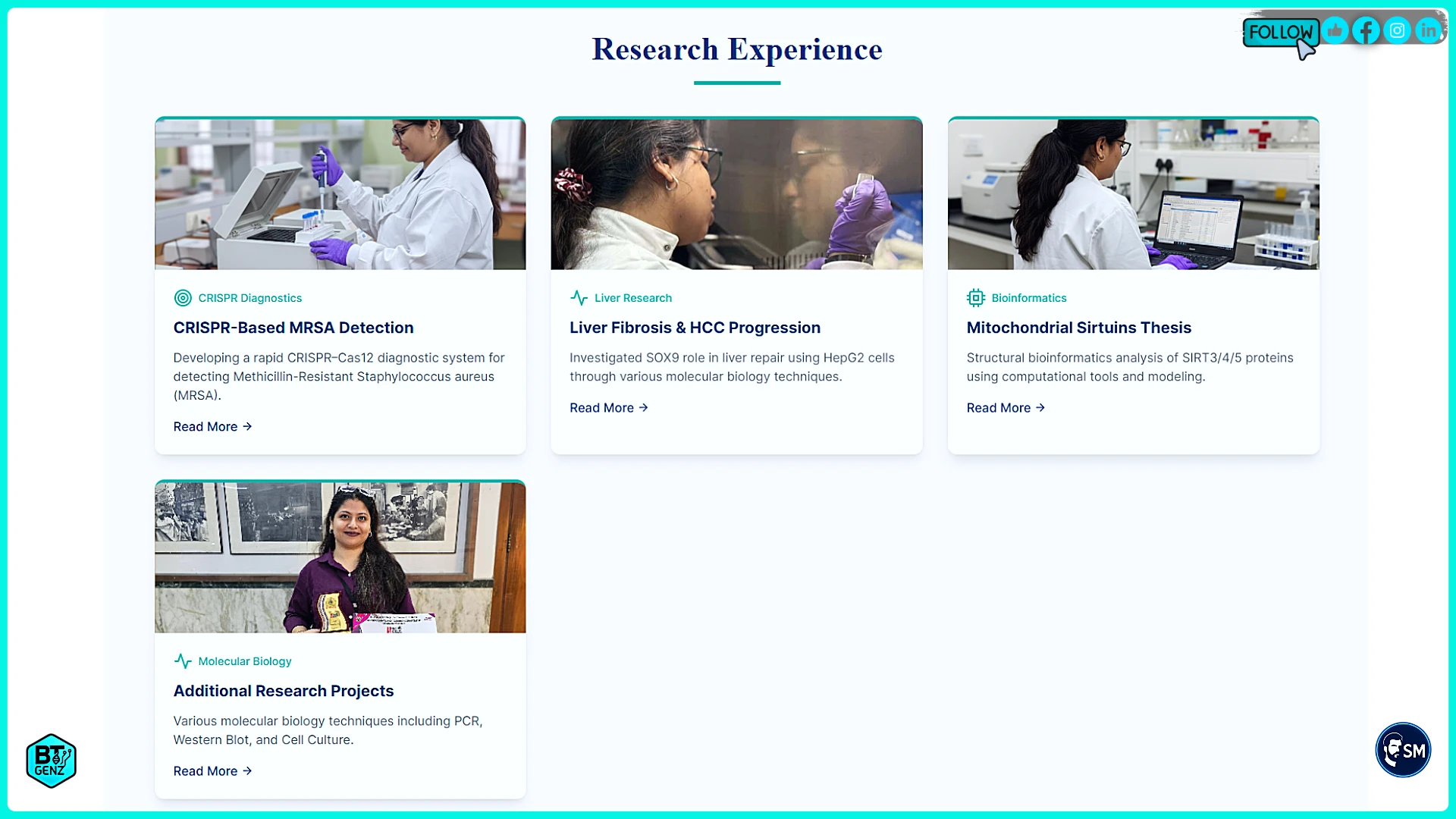
Remember that your portfolio will be reviewed by people with varying technical backgrounds. A bioinformatics team lead might dive deep into your methodologies, but a hiring manager or HR professional conducting initial screening may lack technical expertise. Your case studies must communicate value to both audiences simultaneously - providing enough technical depth to satisfy experts while remaining accessible to general readers.
Use a layered approach to information presentation. Start each section with a plain-language summary explaining the concept simply, then provide technical details for readers who want a deeper understanding. For example: "I used dimensionality reduction to identify patterns in high-dimensional genomic data (specifically, t-SNE followed by k-means clustering, enabling visualization of 20,000-dimensional data in 2D space while preserving local structure)." This structure lets non-technical readers grasp the concept while technical readers get implementation details.
Define specialized terms when first using them, even terms you consider basic. Remember you're writing for a global audience where English may be a second language and educational backgrounds vary. Rather than assuming everyone knows what "variant calling" or "differential expression analysis" means, provide brief explanations or link to resources. This inclusive approach makes your work accessible to broader audiences and demonstrates communication skills employers value highly.
Step 4: Leverage LinkedIn for Global Bioinformatics Opportunities
Optimizing Your LinkedIn Profile for Remote Positions
LinkedIn remains the primary platform where recruiters and hiring managers search for bioinformatics talent, particularly for remote positions that draw from global talent pools. Yet most bioinformatics professionals treat LinkedIn as a static resume repository rather than an active marketing platform. Strategic LinkedIn optimization dramatically increases your visibility to opportunities and positions you as a thought leader in computational biology.
Your LinkedIn headline is the single most important element for searchability - it appears in search results and determines whether recruiters click your profile. Most bioinformatics professionals waste this valuable real estate with generic titles like "Bioinformatics Researcher" or "PhD Candidate." Instead, use your headline to communicate specific value and skills. For example: "Bioinformatics Scientist | NGS Data Analysis & Machine Learning | Python, R, Nextflow | Cancer Genomics" or "Computational Biologist | Building pipelines for single-cell RNA-seq analysis | Open to remote opportunities."
Your About section should tell your professional story compellingly while incorporating keywords recruiters search for. Explain what you do, what problems you solve, what technologies you work with, and what you're looking for in your next opportunity. Write in first person for authenticity and connection. Include a clear call-to-action for opportunities: "I'm currently exploring remote bioinformatics positions focused on genomic data analysis. Feel free to connect or reach out at [email]." This explicit openness signals to recruiters that you're available and interested.
In your Experience section, don't just list responsibilities - describe accomplishments and impact using specific metrics where possible. Instead of "Performed RNA-seq analysis," write "Developed automated RNA-seq analysis pipeline processing 200+ samples monthly, reducing analysis time by 60% and enabling faster research insights for drug discovery projects." Quantifying impact transforms generic experience descriptions into compelling evidence of value you can deliver to employers.
Showcasing Projects Directly on LinkedIn
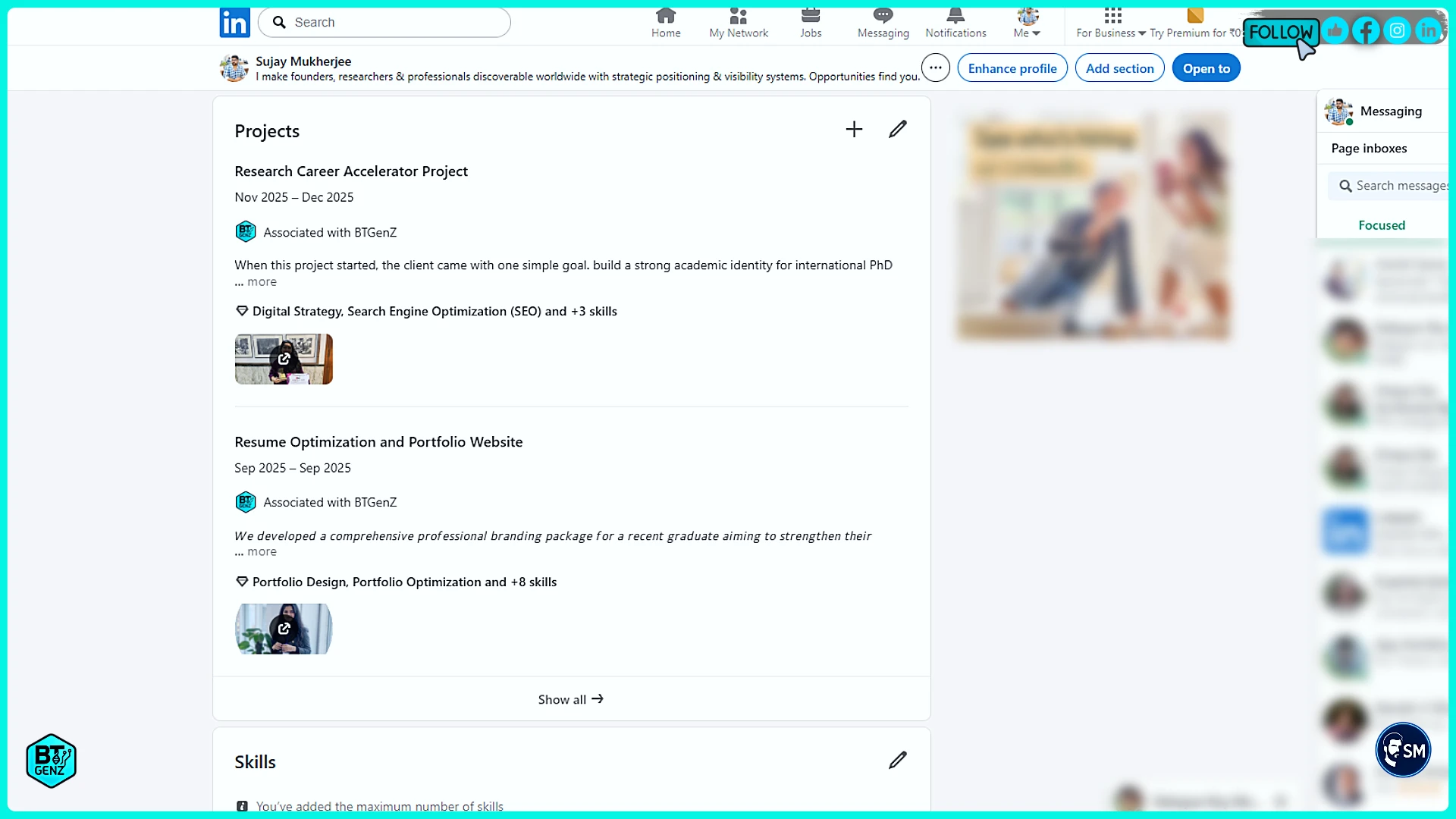
LinkedIn's Featured section allows you to pin content directly to your profile - use this prominently to showcase your best bioinformatics work. Add links to your GitHub repositories, portfolio website, case studies, published papers, presentations, or blog posts explaining your projects. Each featured item includes a thumbnail and description - write compelling descriptions that make people want to click and explore further.
The Projects section lets you list specific accomplishments with descriptions, URLs, and team members. Add your strongest 4-6 bioinformatics projects here with clear, achievement-oriented descriptions. Link each project to relevant GitHub repositories or portfolio pages. If projects involved collaboration, tag team members on LinkedIn - this expands your network and demonstrates teamwork capabilities valued for remote positions.
Skills endorsements matter for LinkedIn's algorithm even if they seem superficial. List your core bioinformatics skills prominently: Python, R, Next-Generation Sequencing, Genomics, Machine Learning, Bioconductor, Statistical Analysis, Data Visualization, Pipeline Development, and specific domains like Cancer Genomics or Microbiome Analysis. Ask colleagues and collaborators to endorse your skills - endorsed skills rank higher in recruiter searches.
Building Thought Leadership Through LinkedIn Content
Posting regular content on LinkedIn positions you as an active professional engaged with your field rather than someone who only updates their profile when job searching. You don't need to post daily - even weekly or biweekly content establishes presence and keeps you visible to your network and potential employers who might not be hiring now but will remember you when opportunities arise.
Share insights from your bioinformatics work, interesting papers you've read, tools or techniques you've learned, or lessons from projects you've completed. Write posts explaining complex concepts accessibly, sharing career advice for aspiring bioinformaticians, or discussing trends in computational biology. Comment thoughtfully on others' posts in your field to increase visibility and demonstrate expertise. This consistent engagement makes your name familiar to people in your network, creating top-of-mind awareness when opportunities appear.
When you complete new projects or achieve milestones, announce them on LinkedIn. "Just published a new RNA-seq analysis pipeline on GitHub - it reduces processing time by 40% using [technique]. Check it out here: [link]." These announcements drive traffic to your portfolio work while demonstrating you're actively developing your skills. Tag relevant individuals or organizations when appropriate to expand reach - if you built a tool using someone else's software, tag them. They might share your post to their network, multiplying your visibility.
Step 5: Create a Personal Brand Around Your Bioinformatics Expertise
Why Personal Branding Matters for Remote Opportunities
Personal branding isn't about self-promotion or creating a false persona - it's about strategically communicating your unique value proposition in consistent, memorable ways. When recruiters encounter hundreds of qualified bioinformatics candidates, they remember those who've established clear professional identities. Your personal brand is the answer to "What makes you different from other bioinformaticians with similar skills?"

Effective personal branding in bioinformatics often focuses on specialization. Instead of positioning yourself as a general bioinformatics expert (competing with thousands of others), position yourself as "the person who specializes in [specific area]." This could be cancer genomics analysis, microbiome computational methods, structural bioinformatics, phylogenetic analysis, single-cell RNA-seq, or any niche where you have deep expertise and genuine interest. Specialization makes you more memorable and often more valuable - employers seeking that specific expertise will seek you out, rather than you competing for generic positions.
Blogging and Content Creation as Portfolio Amplification
Starting a technical blog focused on bioinformatics dramatically amplifies your portfolio's impact while establishing thought leadership. You don't need to be an expert to blog - in fact, writing about what you're learning is often more valuable to readers than expert-level tutorials. Other professionals at your level face similar challenges and appreciate peer perspectives. Document your learning journey, explain solutions to problems you've solved, review tools you've tried, or share interesting analyses.
Medium, Hashnode, Dev.to, or a personal WordPress blog all work well as platforms. Write tutorials explaining bioinformatics concepts or techniques ("How to Perform Variant Calling with GATK: A Complete Beginner's Guide"), project walkthroughs documenting your analytical process, tool comparisons helping others choose between alternatives, or problem-solving posts explaining how you debugged complex issues. Each post demonstrates expertise, improves your writing and communication skills, and creates searchable content that drives organic traffic to your portfolio.
Technical blogging creates multiple career benefits beyond just portfolio enhancement. Your posts rank in Google searches, making you discoverable to people searching for information about topics you've covered. They demonstrate communication skills crucial for remote work where written communication dominates. They establish you as someone who contributes to the community rather than just consuming resources. They provide conversation starters for networking and interviews. Even publishing 6-8 solid blog posts over a year creates a noticeable impact on your professional visibility and opportunity flow.
Speaking Opportunities and Community Engagement
Speaking at conferences, webinars, meetups, or virtual events positions you as an expert and dramatically expands your professional visibility. You don't need to be a senior researcher to speak - many events explicitly seek early-career perspectives. Start locally with university seminars or departmental presentations, then expand to regional bioinformatics meetups, online webinar series, or international conferences as your confidence and reputation grow.
Propose talks about your project work, tutorials on techniques you've mastered, or lessons learned from your research. Conference organizers need content, and they appreciate speakers who can explain complex topics accessibly. Even a 15-minute lightning talk at a small virtual meetup adds "conference speaker" to your resume and creates networking opportunities with attendees and fellow speakers. Record your presentations and add them to your portfolio as an additional demonstration of communication skills.
Engage actively in bioinformatics communities online and offline. Join Biostars, SEQanswers, Reddit's r/bioinformatics, relevant Discord servers, and field-specific forums. Answer questions when you can, ask thoughtful questions when you're learning, and participate in discussions. Community engagement makes you a known quantity within your field's professional networks - the same networks where job opportunities often circulate before being publicly posted. Being an active, helpful community member creates social capital that translates into career opportunities.
Step 6: Tailor Your Project Presentation for Target Opportunities

Understanding What Different Employers Value
Not all bioinformatics employers value the same things in project portfolios. Pharmaceutical companies prioritize work relevant to drug discovery and regulatory compliance. Biotech startups value speed, innovation, and the ability to work with limited resources. Academic research institutions emphasize methodological rigor and publication potential. Technology companies seek software engineering skills and scalability. Understanding these priorities lets you emphasize different aspects of your work when targeting specific opportunity types.
Before applying to positions or reaching out to companies, research what they value. Read their blog posts, examine their GitHub repositories, review their publications, and analyze job descriptions for keyword patterns. Then adjust how you present your portfolio accordingly. When targeting pharmaceutical companies, emphasize regulatory compliance, validation procedures, and collaboration with wet-lab researchers. When targeting startups, highlight your ability to deliver results quickly with minimal supervision and adapt to changing requirements. When targeting tech companies, emphasize scalable code, clean architecture, and software engineering best practices.
Creating Custom Portfolio Views for Opportunities
Consider maintaining multiple versions of your portfolio or resume, emphasizing different project aspects for different opportunity types. Your core portfolio remains comprehensive, but you create tailored landing pages or PDF summaries highlighting the 2-3 projects most relevant to specific positions. This customization requires minimal additional work but dramatically increases relevance to reviewers who may spend only 30 seconds deciding whether to continue reading.
When applying for specific positions, reference their requirements explicitly in your project descriptions. If a job posting asks for "experience with single-cell RNA-seq analysis," and you have relevant projects, your application should state clearly: "My single-cell RNA-seq analysis project (detailed here: [link]) directly addresses your requirement for..." This explicit connection helps reviewers quickly understand fit rather than making them infer whether your experience matches their needs.
Common Mistakes That Weaken Project Presentation
Avoid these critical errors that undermine otherwise strong bioinformatics portfolios. Using jargon without explanation alienates non-specialist reviewers and signals poor communication skills. Presenting only academic projects without demonstrating practical applications makes it unclear what value you offer employers. Failing to update portfolios regularly with recent work suggests stagnation rather than continuous growth. Neglecting to link projects across platforms (GitHub, portfolio site, LinkedIn) creates disconnected experiences where reviewers miss your complete capabilities.
Showing only successful projects without discussing challenges or failures seems inauthentic and misses opportunities to demonstrate problem-solving and resilience. Omitting impact or outcomes in favor of pure technical description leaves reviewers wondering "so what?" about your work. Creating repositories or projects with incomplete documentation suggests you won't produce maintainable code in collaborative environments. Focusing solely on tools used rather than problems solved positions you as a tool operator rather than a problem solver. Finally, making portfolios difficult to navigate or visually unappealing creates friction that causes reviewers to give up before understanding your capabilities.
Measuring and Improving Your Portfolio's Effectiveness
Track metrics indicating how well your portfolio attracts opportunities. Monitor GitHub profile views and repository traffic through GitHub's insights feature. Use Google Analytics on your portfolio website to track visitors, page views, and referral sources. Track LinkedIn profile views and search appearances to understand your visibility. Most importantly, track outcomes: interview requests received, positions offered, and where opportunities came from. These metrics reveal what's working and what needs improvement.
Seek feedback actively from peers, mentors, and even recruiters. Ask bioinformatics colleagues to review your portfolio and GitHub profile, providing an honest critique about clarity, presentation, and impact. Many recruiters are willing to provide brief feedback if approached respectfully - reach out to recruiters at companies you're interested in, explain you're improving your portfolio, and ask what would make a candidate stand out to them. This direct feedback from people making hiring decisions is invaluable.
Iterate continuously based on feedback and results. If certain projects generate more interest than others, investigate why and apply those lessons to other portfolio items. If you're not getting the attention you deserve despite strong work, the presentation likely needs improvement rather than the technical quality. Treat your portfolio as a living document that evolves with your skills and career goals rather than a static archive. Review and update quarterly, adding new projects, refining descriptions, and removing outdated work that no longer represents your current capabilities.
Conclusion: From Projects to Opportunities
Exceptional technical skills in bioinformatics are necessary but insufficient for attracting global remote opportunities. The professionals who thrive in the international bioinformatics marketplace are those who combine strong computational capabilities with equally strong presentation and communication skills. Your projects represent hundreds or thousands of hours of analytical work, coding effort, and intellectual investment - don't let that value remain hidden because of poor presentation.
Start today by auditing your current online presence. Review your GitHub profile critically: do your repositories have comprehensive README files? Are your best projects pinned? Does your code follow professional standards? Examine your LinkedIn profile: does your headline communicate clear value? Have you showcased projects in your Featured section? Do your experience descriptions emphasize impact over responsibilities? If you lack a portfolio website, create a simple one this week using free platforms like GitHub Pages or Notion.
Remember that building a compelling portfolio is not a one-time task but an ongoing process of refinement and growth. Each new project you complete adds to your showcase. Each piece of feedback you receive helps you improve your presentation. Each opportunity that materializes from your portfolio validates your approach and motivates continued investment in this professional development.
The global bioinformatics community is actively seeking talented professionals who can contribute to solving humanity's most pressing biological challenges - cancer research, infectious disease response, agricultural optimization, environmental conservation, and countless others. Your skills and projects have value. By presenting them effectively through strategic portfolio development, GitHub optimization, and personal branding, you position yourself to attract the international opportunities you deserve. Start implementing these strategies today, and watch as global doors begin to open for your bioinformatics career.
If you're also preparing to pursue advanced education in this field, check out our comprehensive guide on how to apply for a Bioinformatics PhD for step-by-step application strategies that complement your professional portfolio development.
Frequently Asked Questions
Founder of BTGenZ. Passionate about simplifying biotechnology for the next generation and bridging the information gap for aspiring biotechnologists in India.

Related Reads
Engage with Our Community
Join the conversation and share your thoughts with the BTGenZ community!
Connect on LinkedInLoading commenting section...
Comments Section
No approved comments yet. Be the first to leave a comment!